The short answer
AI is unlikely to replace accountants, but it is already changing what a working day looks like. The useful way to think about it is task by task. A job in an accounting practice is a bundle of tasks: some are mechanical and repeat every month, and some need you to understand a client, weigh up options and put your name to the outcome. AI is getting good at the first kind. It is still poor at the second, and even where it can produce something that looks right, someone has to be accountable for it.
So the honest answer has two halves. Fewer hours will go on data entry, typing up notes and drafting routine emails, and more of the value a firm offers will sit in review, advice and the client relationship. How quickly that happens depends on your clients’ software, your firm and your professional body, so treat any forecast with care.
The tasks AI is taking over
The work AI handles well has a few things in common: it follows rules, it repeats, and there is a lot of it. In a practice, that usually means:
- Data entry and coding suggestions. Ledgers already suggest how a transaction should be coded and match bank lines to invoices. A person still checks the odd ones, but the volume of manual keying keeps falling.
- Document capture. Receipts, bills and statements can be read and turned into data without anyone retyping them.
- Drafting. General assistants can produce a first draft of an engagement letter, a client explainer or an internal procedure. Our guide to using ChatGPT in an accounting firm covers how to do that safely.
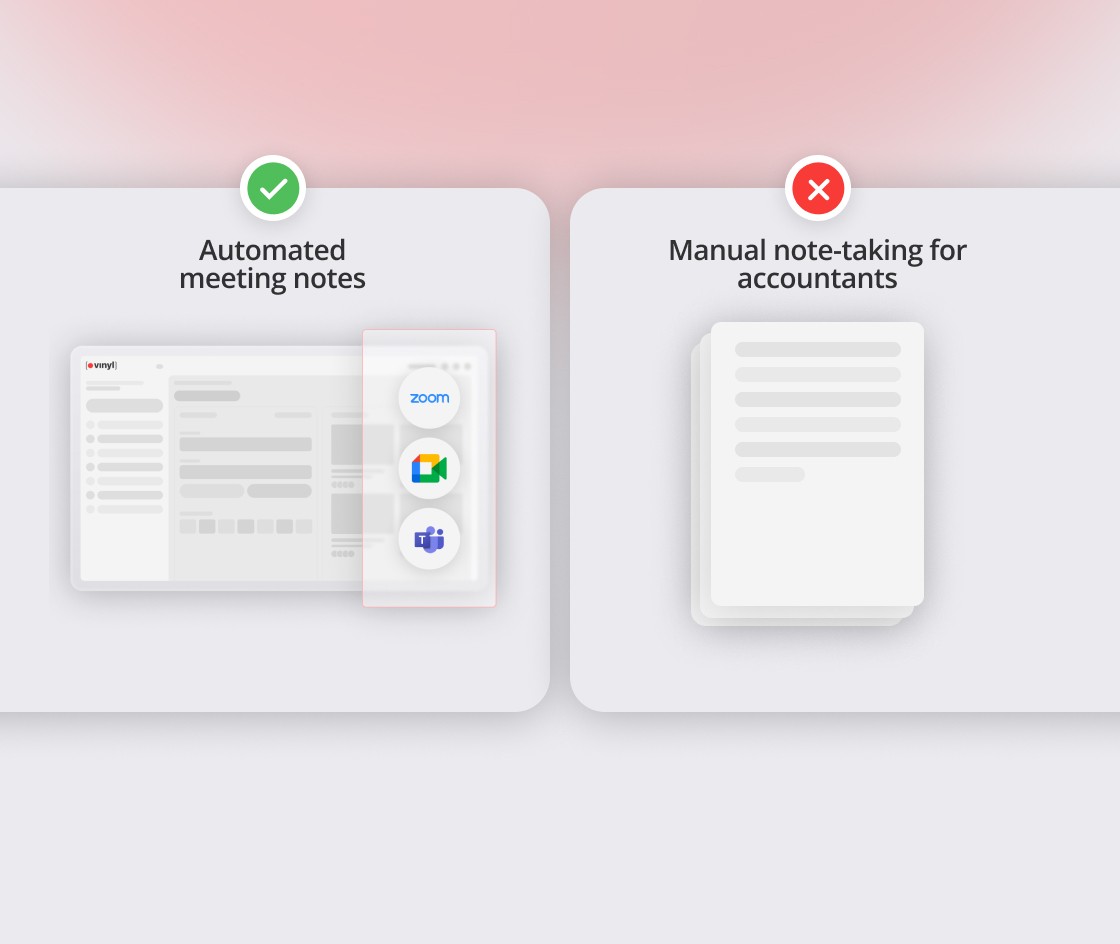
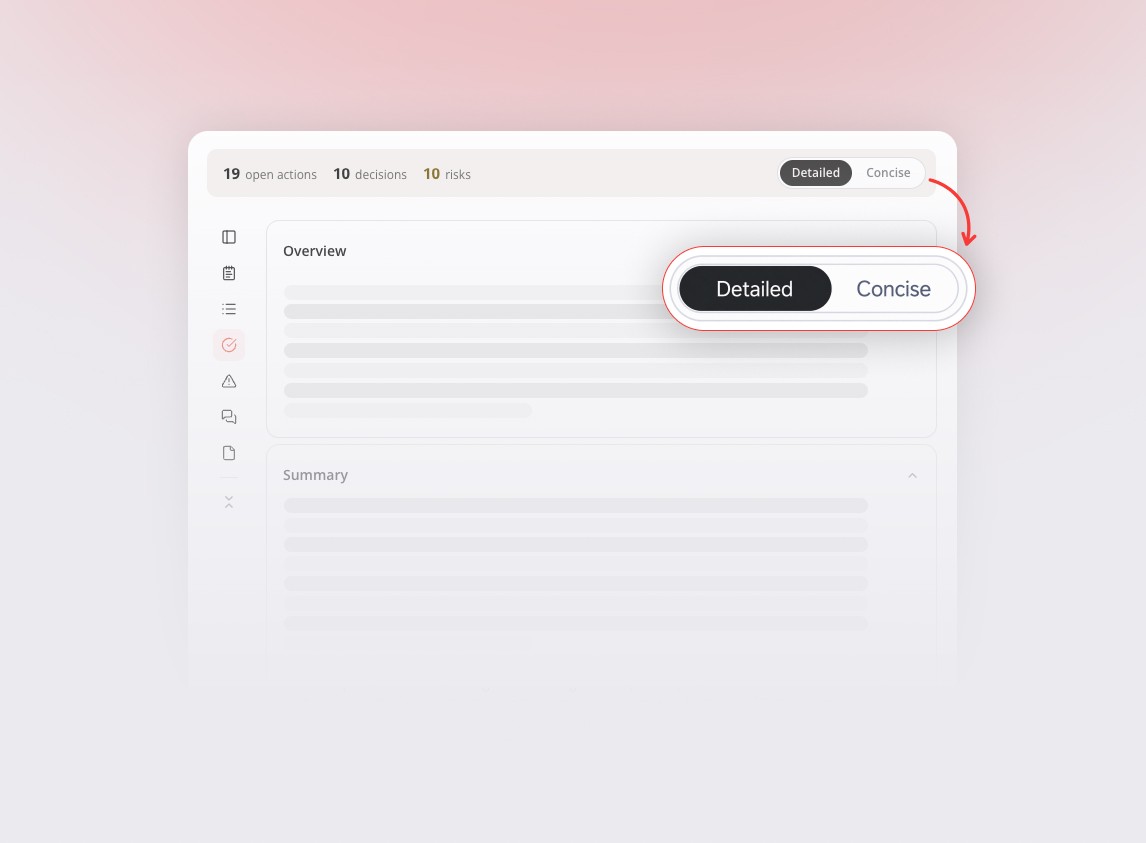
- Meeting notes and follow-ups. A meeting tool can record the call, write the summary, pull out the actions and draft the follow-up email for you to review.
- First-pass analysis. AI can summarise a set of accounts, point out unusual movements or draft commentary for a management report, which an accountant then checks and rewrites.AI can summarize a set of accounts, point out unusual movements or draft commentary for a management report, which an accountant then checks and rewrites.
Each of these produces a draft or a suggestion that a person checks. If you want to see which tools fit each of these jobs, our guide to AI tools for accountants is organised that way.is organized that way.
What still needs an accountant
The parts of the job that stay human are the ones clients pay the most for.
Judgement.Judgment. Tax and accounting rules leave room for interpretation, and the right answer often depends on facts the software doesn’t have: what the client plans to do next year, how their family business is really run, what they told you over coffee. Applying the rules to a messy situation is still your job.
Advice and explaining trade-offs. A client deciding whether to restructure, buy a property or hire their first employee wants someone to lay out the options and tell them what they would do. AI can list considerations. It can’t sit across from a nervous business owner and help them decide.
Accountability and sign-off. When a return is lodged (or filed, in the US) or a set of accounts is signed, a qualified person is responsible for it. That doesn’t transfer to software, and your insurer and professional body will expect a person to have reviewed the work.
Relationships. Clients stay with firms they trust. Trust comes from being remembered, followed up and looked after, and from someone picking up the phone when things go wrong.
Ethics and professional responsibility. Spotting when something doesn’t add up, refusing to sign what you can’t support, and keeping client information confidential are professional duties. AI can help you see more, but the duty stays with you. If you’re unsure what your obligations are when you use AI on client work, check with your professional body, state board or insurer.
Will AI replace bookkeepers?
The honest answer for bookkeeping is the same, with one difference: more of the routine work is exposed. Bank feeds, coding suggestions and document capture take over much of the keying that used to fill a bookkeeper’s week, and that trend is likely to continue.
What it doesn’t remove is the need for someone who understands the client’s books. Software makes confident mistakes, and someone has to catch the misclassified expense, the duplicated bill and the payroll question that doesn’t fit the rules. Clients also still want a person to call. The bookkeeping role is moving toward reviewing what the software did, answering client questions and spotting where the client needs more help. If that describes your practice, our page on AI for bookkeepers shows how it fits short, frequent client calls.
Will AI replace CPAs by 2030?
No reliable forecast exists for 2030 or any other year, and we’d be wary of anyone who offers one. What is reasonable to expect is that the shape of CPA work keeps shifting.
In tax work, more of the preparation is likely to be assisted: gathering documents, populating returns from source data and flagging items that need a closer look. The CPA’s time moves toward reviewing, planning and explaining the result to the client, and toward the questions that don’t fit neatly into a form. In audit and assurance, software can analyse far more transactions than a manual sample would cover, which changes where an auditor spends their time without removing the need for professional scepticism and a signed opinion.In tax work, more of the preparation is likely to be assisted: gathering documents, populating returns from source data and flagging items that need a closer look. The CPA’s time moves toward reviewing, planning and explaining the result to the client, and toward the questions that don’t fit neatly into a form. In audit and assurance, software can analyze far more transactions than a manual sample would cover, which changes where an auditor spends their time without removing the need for professional scepticism and a signed opinion.
The credential and the responsibility that comes with it are what clients and regulators rely on. Your state board sets the rules for CPAs in your state, so if you want to know how AI affects what you can and can’t delegate, that’s the place to ask.
What accounting firms say about AI
We surveyed 259 accounting firms about the work that happens after client meetings, and you can read how accounting firms are using AI for the full write-up. A few results speak directly to the question of replacement.
The first is that firms want AI to take over specific tasks. In our survey, 96% want action items drafted automatically, 91% want automatic transcription and 87% are positive about automated follow-up emails. Every one of those is a draft that a person reviews, and none of them is the advice itself.
The second is that adoption still trails interest: 39% of firms use an AI notetaker regularly, while 29% still take fully manual notes. That gap is a sign that most firms are still working out how to fit AI into their day, not handing jobs over to it.
The third is where the time goes: 57% of firms spend at least 30 minutes on admin per meeting, and the median firm loses 3.8 hours a week to post-meeting tasks. That is the kind of work AI is good at taking off your plate. Our original research write-up has more detail on where those hours go.
How to prepare your firm
You don’t need a grand AI strategy. A few practical habits will put your firm in a better place than most.
Start with your most repetitive hour. Ask your team which task they do the same way every week and dread the most. For many firms it’s the admin after client meetings. Time it for a week before you change anything, so you can tell later whether the tool helped.
Keep a person reviewing anything client-facing. Write down a simple rule: AI drafts, a person checks, and nothing goes to a client until someone has read it. That keeps quality up and protects your professional responsibility.
Check how each tool handles client data. Before anyone records a meeting or pastes in a client file, find out where the data is stored, who can see it and whether the vendor trains AI on it. Our guide on whether it’s safe to use an AI notetaker in client meetings lists the questions to ask, and your professional body’s guidance is worth reading alongside it.
Move people toward advisory work. The hours AI gives back are only useful if they go somewhere. Some firms put them into client advisory services, such as regular reviews, forecasting and planning meetings. Our explainer on what CAS accounting is covers how firms set that up.
Where Vinyl fits
We build Vinyl, so here is a concrete example of AI doing a task rather than the job. Vinyl joins your Zoom, Microsoft Teams and Google Meet calls, and the mobile app records in-person meetings. After each meeting it writes an accounting-specific summary, with firm actions and client actions kept separate, and syncs notes and actions to the client in Karbon or FYI. Clients, contacts and groups sync into Vinyl from Xero Practice Manager.
Vinyl also drafts the follow-up email. You read it, change what needs changing, and click Send from your own Gmail or Outlook, or save it as a draft. The typing goes away. The advice, the check and the relationship stay with you.
Frequently Asked Questions
Will AI replace accountants?
AI is unlikely to replace accountants, but it is taking over parts of the work, such as data entry, document capture, and first drafts of notes and emails. Judgement, advice, sign-off and client relationships still need a qualified person, and nobody can reliably say how fast the rest will change.AI is unlikely to replace accountants, but it is taking over parts of the work, such as data entry, document capture, and first drafts of notes and emails. Judgment, advice, sign-off and client relationships still need a qualified person, and nobody can reliably say how fast the rest will change.
Will AI replace bookkeepers?
Not entirely. More routine bookkeeping work is exposed to automation than advisory work, so the role is shifting toward reviewing what software produces, keeping the books accurate, answering client questions and offering more advice.
Which accounting jobs are most at risk from AI?
Roles made up mostly of repetitive, rules-based, high-volume tasks are the most exposed, such as manual data entry and routine processing. Roles built on judgement, review, advice and client relationships are the least exposed, and they are likely to grow in importance.Roles made up mostly of repetitive, rules-based, high-volume tasks are the most exposed, such as manual data entry and routine processing. Roles built on judgment, review, advice and client relationships are the least exposed, and they are likely to grow in importance.
Should I still become an accountant?
If you enjoy solving problems for people and are willing to keep learning, there is still plenty of work that needs an accountant. Expect to spend less time on data entry and more on reviewing, advising and explaining, and get comfortable checking AI output as part of the job.
How should accounting firms use AI?
Start with the most repetitive task in your week, such as the admin after client meetings. Keep a person reviewing anything that goes to a client, check how each tool handles client data before you use it, and put the time you save into advisory work.