Start with the clients you already have
The people most likely to send you a new client are the ones you already look after, and a recommendation from them carries more weight than anything you could say about yourself.
Timing matters, so ask when a client is happiest: when you’ve sorted out a problem that was worrying them, when a planning meeting ends with a clear plan, or when they thank you for something. A simple question works well, such as “Do you know anyone else in the same spot you were in before we started?”
Then make it easy for them to pass you on. Give them one sentence that says who you help, and a link where someone can book a first conversation. Offer to make the introduction yourself if that’s easier for them.
When someone refers a client, thank them, and let them know the introduction went well without sharing anything confidential. People keep referring when they can see it was appreciated.
Pick a niche people can repeat
A referral only travels as far as the sentence that carries it. “She’s an accountant for small businesses” is hard to act on, because it describes almost every firm. “She looks after builders and trades businesses in our area” is easy to repeat, and the person hearing it knows straight away whether it’s for them.
A niche can be an industry, a type of client or a service, and the best ones usually come from work you’ve already done. If you haven’t chosen yours yet, our guide on how to start an accounting firm walks through choosing one, and the thinking applies just as well to a firm that already trades.
Build two or three referral partners
Some professionals meet your ideal clients before you do. Lawyers, financial planners, mortgage brokers and business bankers all deal with business owners at the moments when they need an accountant: setting up a company, buying a property, applying for finance or planning for retirement.
Two or three partners who understand exactly who you help, and who trust you with their clients, will do more than a full contact list. Offer to be useful to them first, refer clients their way when it genuinely fits, and keep in touch between referrals.
Accountants and bookkeepers can be strong partners for each other. A bookkeeper keeps the books up to date through the year, and an accountant handles tax, compliance and advice, so each meets clients who need the other. If you’re an accounting firm that doesn’t do monthly bookkeeping, find a bookkeeper whose work you’d stand behind, and the other way round.
If a referral arrangement involves any payment or fee sharing, check your professional body’s rules first and be open with the client about it.
Be findable where local clients look
If your clients are local, a search is often where they start, so make sure what they find is complete and current.
Set up your business profile on Google with your services, the area you cover, your hours and a link to book a call. Ask happy clients for a review when they tell you they’re pleased, and reply to the reviews you get calmly and without sharing client details.
On your own website, give each main service and each niche its own page that says who it’s for, what’s included and how to take the next step. A page about accounting for trades businesses answers the question a builder actually has.
Use the directories of the software you’re certified in
Several ledger and practice software vendors list certified advisers in a directory their users can search when they want help. The business owners searching those directories already use the software and want someone who knows it, which makes them a good fit for a firm that does.
Check whether the vendors you’re certified with run a directory, what it takes to be listed and how your profile appears. Then fill the profile in properly with your niche, your services, where you work and how to book a first conversation, and keep it up to date.
Teach something useful
Teaching is a low-pressure way to show people how you think. Write a short guide that answers a question your niche asks every year, give a talk to a local business group or industry association, or send a regular email to your clients with something useful in it that they can forward to a friend.
Keep it plain and practical, and keep it general, because advice for one person’s situation belongs in a meeting. Finish each piece with an easy next step, such as a link to book a first conversation.
Turn the first conversation into a signed proposal
All the ways above lead to the same place: a first conversation with someone who might become a client. A good call can still come to nothing if the follow-through is slow, so this is the step to tighten first.
Run the call with an agenda. A discovery call is short, and it’s for understanding what the business needs and whether you’re the right firm, not for detailed fees. Our discovery meeting agenda gives you a structure you can send with the invite, and our guide to the discovery call covers the questions to ask.
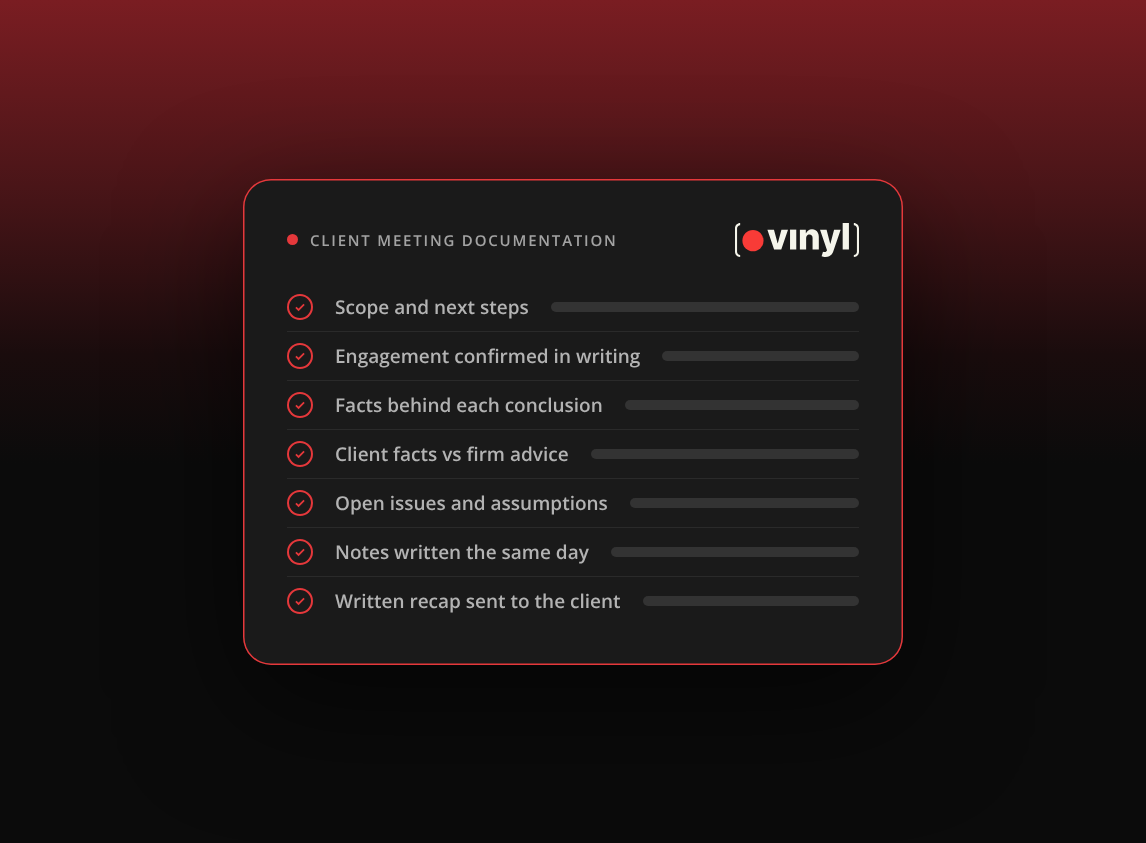
Follow up the same day. Send a short email that says what you heard, what happens next and what you need from them. Here’s the follow-up email we recommend after any client meeting.
Get the proposal out while the conversation is fresh. The longer a proposal waits, the cooler the client gets. Our guide to turning a client meeting into a proposal covers the steps from the call to a proposal ready to send.
Put the agreement in writing. Once they say yes, agree the scope in an engagement letter before the work starts. Our bookkeeping engagement letter template is a good starting point.
Onboard well, because that is where the next referral comes from
A new client decides early on whether they chose well. If onboarding is clear and organised, they start telling people about you, and if they have to chase you for what was agreed, they tell people that too.A new client decides early on whether they chose well. If onboarding is clear and organized, they start telling people about you, and if they have to chase you for what was agreed, they tell people that too.
Onboard in the same order every time: the engagement letter, identity checks, access to the client’s ledger and records, and a kickoff meeting where you agree how you’ll work together. Tell the client what happens next and when they’ll hear from you. Our client onboarding checklist for accounting firms lists each step so nothing gets missed in a busy week.
Once the client has seen your work make a difference, you’re back at the first way on this list, and it’s a good moment to ask who else they know.
How to get bookkeeping clients
Most of the advice above applies to a bookkeeping practice, but a few things are different.
Your best prospect is often a business owner who has fallen behind on their books and knows it. They tend to go looking when something forces the issue, such as a tax deadline, a lender asking for figures or a new accountant asking for clean records. Make it easy to find a clear offer for them: a catch-up to bring the books up to date, followed by monthly bookkeeping so it doesn’t happen again.
Accountants are one of your strongest referral sources. Some accounting firms would rather not do monthly bookkeeping themselves, and they want clients who arrive with tidy records. Get to know a few local firms, show them how you work, and make their job easier when you share a client.
Bookkeeping is usually monthly recurring work, so write the scope down and price it as a monthly package. A clear scope lets you notice when a client’s needs grow, and it makes the conversation about a change in fee much easier. Much of that work runs on regular client calls, and if the notes from those calls are the part that slips, an AI meeting assistant for bookkeepers can take it off your plate.
Where Vinyl fits
Winning clients is your work: the referrals, the relationships and the judgement on scope and price are all yours. What Vinyl takes is the admin after each conversation. It records your discovery call or first meeting on Zoom, Microsoft Teams or Google Meet, or in person with the mobile app, and writes the notes and action items. It then drafts the follow-up email for you to review, and you click Send from your own Gmail or Outlook, or save it as a draft. If you use Ignition, Socket or Anchor, Vinyl drafts the proposal from the meeting for you to review, and it’s saved as a draft in that tool for you to finish and send. See how it works on theWinning clients is your work: the referrals, the relationships and the judgment on scope and price are all yours. What Vinyl takes is the admin after each conversation. It records your discovery call or first meeting on Zoom, Microsoft Teams or Google Meet, or in person with the mobile app, and writes the notes and action items. It then drafts the follow-up email for you to review, and you click Send from your own Gmail or Outlook, or save it as a draft. If you use Ignition, Socket or Anchor, Vinyl drafts the proposal from the meeting for you to review, and it’s saved as a draft in that tool for you to finish and send. See how it works on the product page, or start for free.
Frequently Asked Questions
How do I get my first accounting clients?
Start with people who already know your work: former colleagues, past clients you’re allowed to approach and referral partners who serve the clients you want. Our guide on how to start an accounting firm covers winning your first clients alongside choosing a niche, pricing and software.
How do I get bookkeeping clients?
Offer a clear catch-up and monthly package for business owners who are behind on their books, build relationships with local accountants who would rather not do the bookkeeping themselves, and make sure you’re easy to find in local search and in the adviser directory of the software you’re certified in.
How do accountants get clients without cold calling?
Mostly through referrals from happy clients and from partners such as lawyers, financial planners, mortgage brokers and business bankers. A clear niche, a complete business profile, a listing in your software vendor’s directory and useful guides or talks bring in people who are already looking, so you aren’t chasing strangers.
How long does it take to build a client base?
It depends on your niche, how many referral sources you have and how many first conversations you’re having. What speeds it up is a niche people can repeat, a few active referral partners, and following up every first conversation the same day with a proposal close behind.
Should a small firm pay for advertising?
It can help once you know exactly who you’re for, because then you can aim the ads at that niche and judge whether they bring in the right clients. Before that, referrals, local search and directory listings usually give a small firm more for the effort, so get those working first and test advertising carefully.