A client gets in touch months later asking why their return was prepared the way it was. You remember the meeting. You remember roughly what you said. What you can’t find is anything written down that shows what the client told you, what you advised and what they decided.
Most accountants have been on one side of that conversation. The fix is dull and reliable: a file note, written the same day, in the same shape every time. Below is why it matters, what goes in one, a template to copy and a worked example.
Why file notes matter in public practice
A file note is the firm’s internal record of a client interaction. Its readers are your colleagues, your future self and, occasionally, someone reviewing the file because something has gone wrong.
It is the client record
The engagement letter says what you were hired to do. The file note shows what actually happened along the way: the information the client gave you, the advice you gave back and the decisions they made. When a return, a set of accounts or a piece of advice is questioned later, that’s what you’ll be relying on.
It settles disagreements early
Most disputes start small: the client remembers being told something slightly different, or doesn’t remember being asked for a document. A dated note written straight after the conversation carries far more weight than anyone’s memory, including yours.
It makes handover possible
Staff move on or go on leave. If the only record of a client relationship is in one manager’s head, the next person starts from nothing. A good file note lets a colleague pick up the client without ringing the person who used to look after them.
It supports your professional obligations
Professional bodies expect members to keep proper records of the work they do and the advice they give. The detail differs by body and by country, so check your professional body’s guidance, whether that’s CPA Australia, CA ANZ, the IPA, the AICPA, ICAEW, ACCA or AAT, along with your firm’s own policies. A consistent file note habit makes it much easier to show you’ve followed them.
What a good file note contains
A useful file note answers the questions someone would ask a year from now with no other context. Who was there, why you met, what the client told you, what you told them, what was decided, and who is doing what by when.
It should also record the things at the edge of the engagement. If a client asked about something you didn’t advise on, or you told them a matter was outside your scope, write that down. Those are the lines people look for when a disagreement starts.
A good note records advice in the words you actually used, caveats included, and keeps what the firm will do apart from what the client will do.
A file note template you can copy
Paste this wherever your team keeps notes. Keep every heading and write “None” where nothing applies, so a reader knows you considered it.
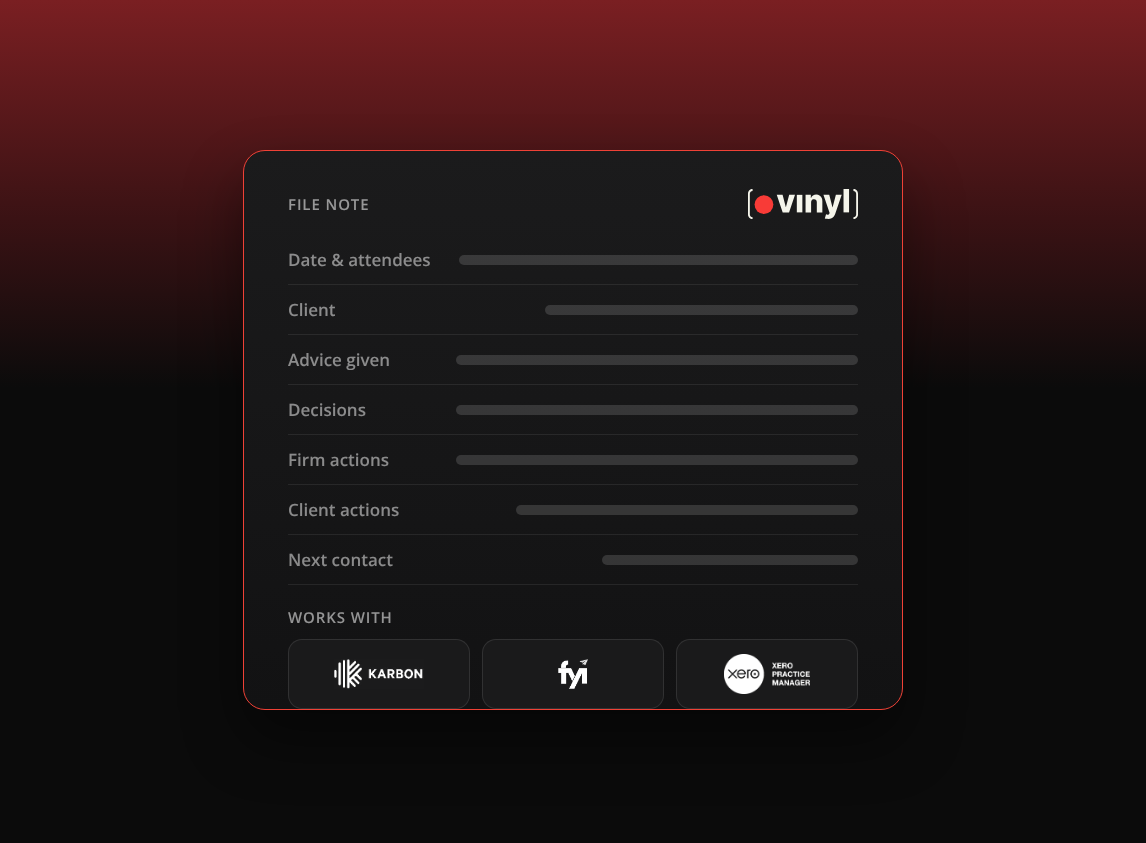
FILE NOTE

Client:
Date and time:
Duration:
Meeting type: (in person / video call / phone call)
Attendees: (name and role, firm side and client side)
Prepared by:

Purpose of the meeting:

Information received from the client:
-

Advice given: (what was said, including caveats and assumptions)
-

Decisions made by the client:
-

Firm actions:
- Action | Owner | Due date

Client actions:
- Action | Due date

Matters raised but not resolved, or outside scope:
-

Next contact: (date, format and purpose)
A filled-in example
Here’s how that looks for a fictional client after a short video call. The business and the people are made up.
FILE NOTE

Client: Pemberly Widget Co (fictional)
Date and time: 14 October, 10:00am
Meeting type: Video call
Attendees: Sam Example (client, director), Alex Sample (client,
operations manager), Jo Placeholder (manager, our firm)
Prepared by: Jo Placeholder

Purpose of the meeting:
Review the draft year-end accounts and discuss the planned van purchase.

Information received from the client:
- Van quote received, delivery expected next month.
- Director loan balance not yet confirmed by the client.

Advice given:
- Explained the options for funding the van and how each would appear
  in the accounts. Said we would confirm the tax treatment in writing
  once we have the final finance agreement, and that no decision should
  be made on the basis of this call alone.

Decisions made by the client:
- Proceed with the van purchase, subject to our written advice.
- Hold off on any dividend until the final profit figure is confirmed.

Firm actions:
- Written advice on van funding options | Jo | 21 October

Client actions:
- Send signed finance agreement | 17 October
- Confirm director loan balance | 17 October

Matters raised but not resolved, or outside scope:
- Sam asked about restructuring before the business opens a second
  site. Told him this is outside the current engagement and that we
  would send a separate proposal if he wants us to look at it.

Next contact:
Video call on 28 October to review the final accounts.
The advice line records the caveat, which is usually the part that matters later. The out-of-scope line protects the firm and is also potential work that would otherwise vanish once the call ends.
Common file note mistakes
Writing it days later
The headline decision survives a few days. The figure mentioned in passing, the caveat and who promised which document tend to fade. Our research across 259 accounting firms found 57% spend at least 30 minutes of admin per meeting, so it’s easy to see why the note slips to Friday. Try to write it before the next meeting starts.
Recording the topic and leaving out the advice
“Discussed van purchase” tells a reader almost nothing. Write down what you actually said, the assumptions it rested on and anything you said you’d confirm.
Mixing firm and client actions
One combined list makes it hard to tell later who dropped the ball. Keep separate sections, each with dates.
Leaving out what wasn’t covered
If the client raised something and you didn’t advise on it, record that. A gap in the note can look like advice that was given and forgotten. We’ve written more about this in common documentation mistakes in accounting client meetings.
Filing it somewhere private
Notes in a personal notebook or someone’s inbox are invisible to the rest of the firm. A file note belongs on the client record, short enough for a colleague to read in two minutes.
How a file note differs from the follow-up email
Both come from the same meeting, and they’re written for different readers. The follow-up email goes to the client and tells them what was agreed and what you need from them. The file note stays inside the firm and records the detail behind it, including your reasoning, the caveats and anything you decided not to take on. Most meetings need both.
Where Vinyl fits
We built Vinyl for accounting firms, and the file note is one of the things it writes after a meeting. Vinyl joins Zoom, Microsoft Teams and Google Meet calls from your Google or Microsoft calendar, and the mobile app records in-person meetings. Phone calls aren’t recorded, though you can upload an audio file or a transcript if you have one.
From the recording, Vinyl writes an accounting-specific summary with firm actions and client actions kept apart. Custom prompts, a glossary and your own writing style let the file note follow the headings and terms your firm already uses. The note is then filed to the right client in Karbon or FYI. If you run Xero Practice Manager, your clients, contacts and groups sync from XPM into Vinyl, so each meeting is matched to the right client.
The person who ran the meeting still reviews the note before anyone relies on it. Whether the advice line says what you meant is your call.
A habit worth keeping
A file note takes ten minutes while the meeting is fresh and much longer once it isn’t. Most are never read again, and the one time someone goes looking, it tends to be the document that matters most on the file. Try the template on your next client meeting.
Frequently Asked Questions
What is a file note in accounting?
A file note is the firm’s internal record of a client meeting, call or significant conversation. It records who was involved, what the client told you, the advice you gave, what was decided and who is doing what next. Your colleagues and future reviewers read it. The client doesn’t.
What should a file note include?
Date, time and attendees, meeting type, purpose, information received, advice given with caveats, client decisions, firm and client actions with dates, matters outside scope, and the next contact. Write it the same day.
Can AI write file notes for accountants?
Yes, as long as someone reviews them. Vinyl writes the file note from the recorded meeting and files it to the client in Karbon or FYI. The accountant who ran the meeting should read and correct it before it becomes part of the record.
Is a file note the same as meeting minutes?
They overlap. Minutes usually record a formal meeting for everyone who attended. A file note is for the firm’s own file and includes your reasoning and scope boundaries.