Most firms that offer client advisory services have had this meeting. The client is engaged, the conversation is good and a few ideas come up that clearly need more work. Everyone leaves feeling it went well. A month later the follow-up still hasn’t been scoped, and the next time you speak to the client it’s about their tax return.
The advice was given, and the work never started.
This guide is about the meeting itself: how to prepare for it, run it, catch the signals in it and follow it up so a good conversation becomes a defined, priced piece of work. It’s written for partners and managers in public practice, whether your firm calls it CAS, advisory or business services.
What client advisory services covers in a practice
Client advisory services, often shortened to CAS (particularly in the US), is the umbrella for work that goes beyond compliance. The label varies between firms and countries, and so does the scope. In most practices it includes some mix of:
- Management reporting and regular reviews of the numbers
- Cash flow forecasting and budgeting
- Business planning and goal setting
- Pricing, profitability and cost reviews
- Structuring advice as the business or family situation changes
- Outsourced CFO or finance function support
- Succession and exit planning
What these share is that none of them arrives as a deadline. Compliance work turns up because the calendar says so. Advisory work turns up because a client says something in a meeting and someone in the firm notices. That makes the meeting the most important point in the whole service, and the place where most of it is won or lost.
Prepare for the conversation you’re about to have
Advisory meetings go badly when the adviser spends the first ten minutes catching up. Before you sit down, you want to know what was discussed last time, which actions are still open on both sides, what has changed in the client’s numbers and what the client said they were worried about.
Ask the client for their agenda too. One question does most of the work: “What would make this meeting worthwhile for you?” Their answer often tells you more than the management accounts.
If you use Vinyl, a pre-meeting brief pulls this together from your previous meetings with the client and the description on the calendar invite. It’s an internal prep sheet, and the client never sees it.
Run the meeting around the client’s decisions
The temptation in an advisory meeting is to present. You’ve done the work on the numbers, so you walk the client through them. Clients rarely remember the walkthrough. We’ve written about what clients actually remember from an advisory meeting, and it tends to be the decisions they made and the one idea that changed how they see their business.
A structure that works for most reviews:
- Start with what’s changed since you last met, in the client’s own words.
- Agree the one or two things this meeting needs to decide.
- Use the numbers to inform those decisions, and leave the rest in the pack.
- Say the decisions out loud before the meeting ends.
- Agree who does what, and when you’ll speak next.
Leave some time at the end. The most useful thing a client says often comes in the last five minutes, once they’ve relaxed and mention the thing that’s actually been bothering them.
Capture the scope and pricing signals
This is where most advisory work is lost. A client mentions they’re hiring, or thinking about a second site, or that their bookkeeper has left. The person in the meeting hears it as background. Unless someone writes it down and passes it to a person who can scope it, it’s gone.
Things worth listening for:
- Changes in the business, such as hiring, new premises, new contracts or new markets
- Money moving, such as funding, large purchases, loans or dividends
- Life events, such as property, inheritance, separation or retirement
- Friction, from spreadsheets and late reporting to “I’m not sure we’re doing this right”
- Plans to sell, bring in a partner or pass the business on
When you hear one, ask one more question before moving on. How soon does it need to happen, what would a good result look like, and who else is involved? The answers are your scope. Note whether the client gave any sense of urgency, budget or who makes the call, because you’ll need that to price the work.
Vinyl’s revenue opportunities feature reads the meeting and flags the moments where a client raised a need the firm could help with, along with the quote from the transcript. A partner who wasn’t in the room can see exactly what was said.
Follow up while the client still remembers
The follow-up email is where advice becomes a commitment. Send it the same day if you can. Restate what was decided, list what the firm will do and what the client will do with dates, and name any further work as its own item with a clear next step, for example: “We’ll send you a proposal for the cash flow forecast by Friday.”
Vinyl drafts that email from the meeting. You review it, then send it from your own Gmail or Outlook or save it as a draft.
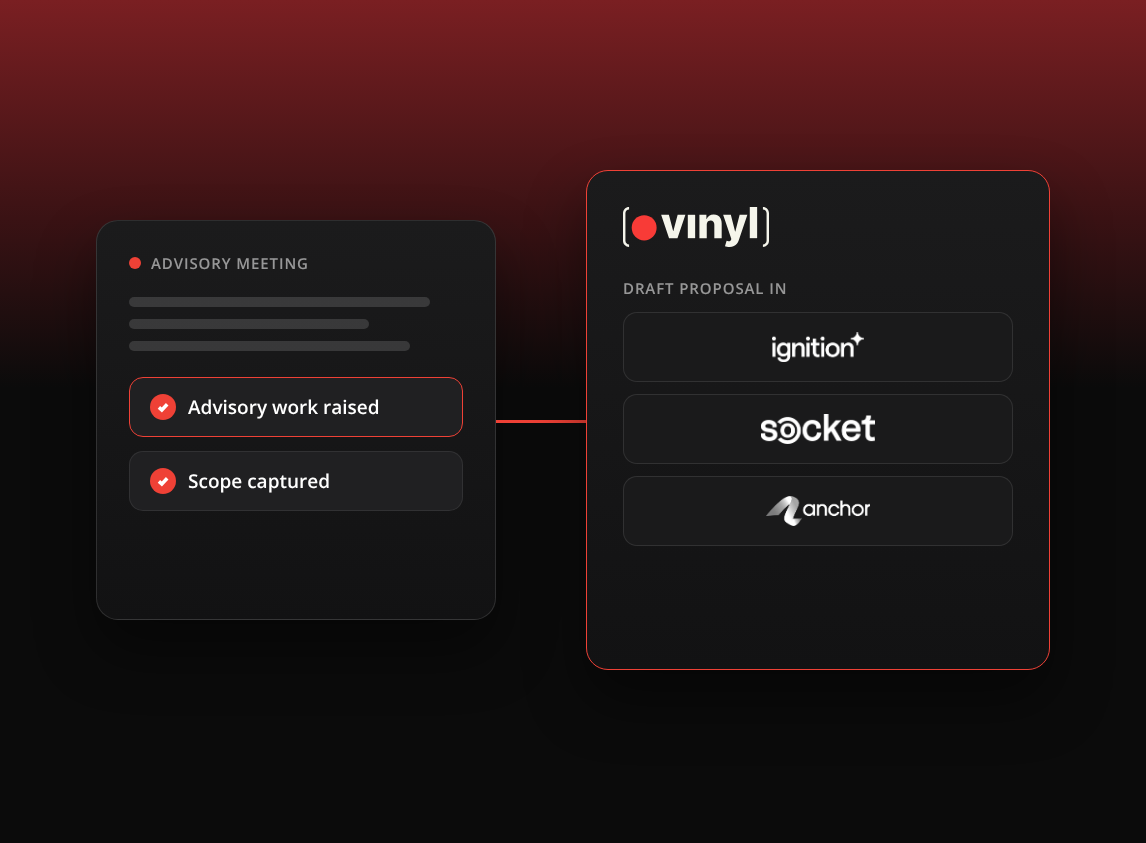
Then send the proposal, and favour speed over polish. Vinyl connects toThen send the proposal, and favor speed over polish. Vinyl connects to Ignition, Socket and Anchor, so the scope, decisions and next steps from the meeting summary go into the proposal without anyone retyping them from memory.
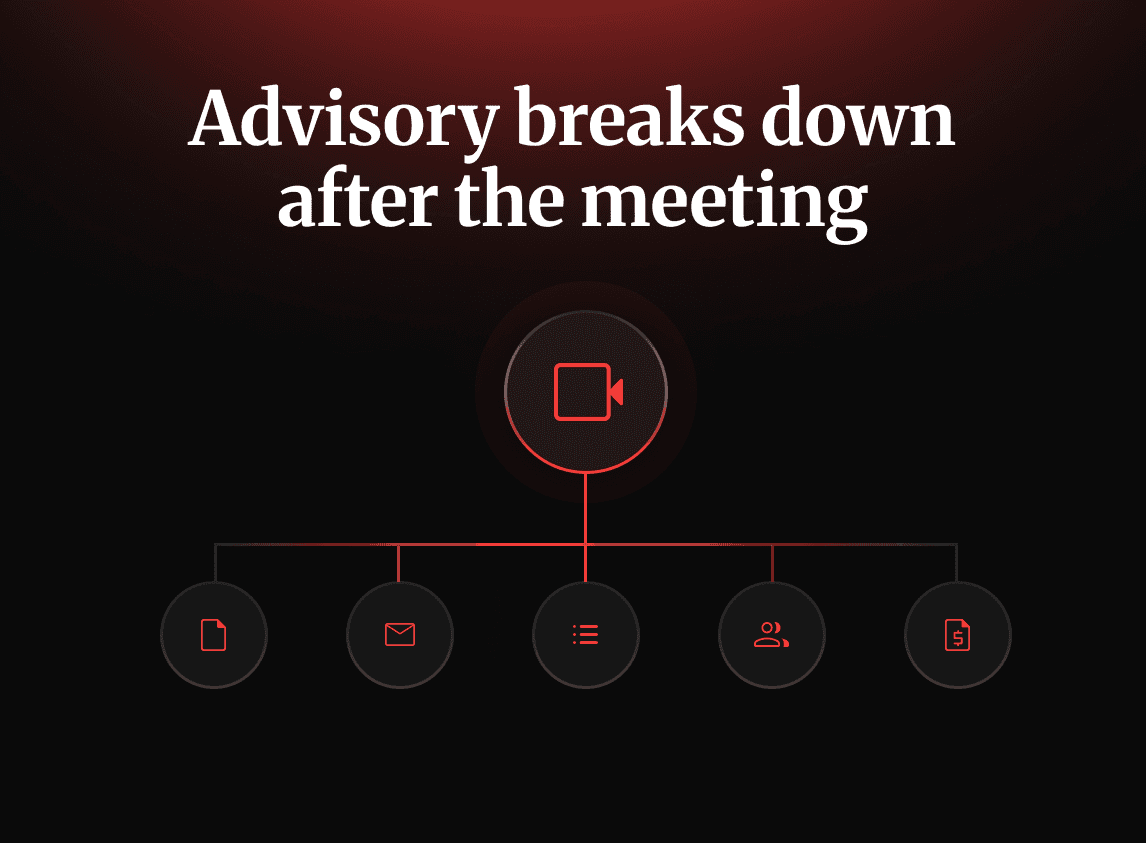
We’ve written more about the gap between a good meeting and the work that should follow in why advisory work breaks down after the meeting.
Turn one-off advice into a recurring service
A single advisory meeting is useful. A regular one is a service. Firms that grow their advisory work tend to make a second meeting the default outcome of the first.
Some ways to do that:
- End every advisory meeting by booking the next one.
- Package the work as an ongoing review with a set rhythm and defined deliverables, and propose it as a recurring engagement.
- Open each review with the actions from the last one, so the client can see progress.
- Keep a running record of the decisions the client has made. After a year, that record is the clearest evidence of what your advice has done for them.
Scaling it beyond the partners is the hard part. If only partners can spot and scope advisory work, the service is limited by their diaries. Our post on why advisory keeps stalling at partner-led looks at what helps managers run these meetings with confidence.
Consistent records make that easier. When every advisory meeting is recorded, summarised with firm and client actions and filed to the client in Karbon or FYI, a manager can see how a partner runs the conversation and pick up a client without starting from scratch. Tagging meetings as Advisory in Vinyl also lets you filter to every advisory conversation before a planning session and see which opportunities are still open.Consistent records make that easier. When every advisory meeting is recorded, summarized with firm and client actions and filed to the client in Karbon or FYI, a manager can see how a partner runs the conversation and pick up a client without starting from scratch. Tagging meetings as Advisory in Vinyl also lets you filter to every advisory conversation before a planning session and see which opportunities are still open.
What happens after the meeting decides the outcome
Good advisory meetings are easy to have and easy to waste. Whether they turn into work usually comes down to the hour afterwards: whether anyone wrote down what the client needed, scoped it while it was fresh and booked the next conversation before the client logged off. Get that hour right and the advice has somewhere to go.Good advisory meetings are easy to have and easy to waste. Whether they turn into work usually comes down to the hour afterward: whether anyone wrote down what the client needed, scoped it while it was fresh and booked the next conversation before the client logged off. Get that hour right and the advice has somewhere to go.
Frequently Asked Questions
What are client advisory services in accounting?
Client advisory services are the work an accounting firm does beyond compliance, such as management reporting, cash flow forecasting, budgeting, business planning, structuring advice and outsourced CFO support. The exact mix varies from firm to firm.
What is CAS accounting?
CAS stands for client advisory services. The term is used most in the US, while firms in Australia and the UK often say advisory or business services. It describes the same idea: ongoing, forward-looking work with clients alongside tax and accounts.
How should a firm price client advisory services?
Pricing depends on your market, the scope and the value to the client, so we won’t suggest figures. The habit that helps most is capturing scope signals in the meeting itself, such as urgency, budget and who decides, so you can price the proposal while the conversation is fresh.
How can AI help with client advisory meetings?
An AI meeting assistant built for accountants can prepare a brief before the meeting, record and summarise it with firm and client actions, flag work the client raised and draft the follow-up email for you to review and send. Vinyl does all of these and connects to Ignition, Socket and Anchor for proposals.An AI meeting assistant built for accountants can prepare a brief before the meeting, record and summarize it with firm and client actions, flag work the client raised and draft the follow-up email for you to review and send. Vinyl does all of these and connects to Ignition, Socket and Anchor for proposals.