Barry AccountantsOnline-first accounting firm serving SMEs, trades, and offshore contractors
With 30–50 client meetings a week and a mostly part-time team, Barry Accountants needed a way to stop re-listening, re-typing, and re-explaining.
The answer wasn’t more people; it was a tighter meeting workflow.
At-a-glance stats
- Time saved
- ~20 minutes per meeting (minimum)
- Meeting volume
- 30–50 meetings per week
- Throughput
- Revenue and productivity both up with the same team
- Adoption
- 100% of staff using Vinyl
- Follow-ups
- Tasks and next steps captured automatically in one place
Before: What life looked like pre-change
Context
Barry Accountants is a long-established Irish firm led by Kevin Barry, a chartered accountant with 30 years’ experience.
The firm runs three distinct departments:
- Online accounting (primarily QuickBooks)
- Offshore tax services
- Traditional accounting for local shops, pubs, and builders
Despite having only five staff—three part-time, the firm handles 30–50 client meetings every week, most of them online.
Old workflow + tools
Before Vinyl, meetings were recorded—but everything around them was manual:
- Zoom meetings recorded
- Files downloaded as MP3s
- Uploaded into Loom
- Tagged manually
- Re-watched later to confirm what was said
- Notes and tasks written separately (or not at all)
“Before Vinyl came along, we were recording Zooms and just saving them onto a confidential database. You go on there, you download the MP3, you put it into Loom, you wait for it, you tag it… it was pretty manual.”
The recordings existed, but they weren’t doing any real work for the team.
The pain
- 20+ minutes lost per meeting downloading, uploading, tagging, and sharing recordings
- Team members had to re-listen just to confirm next steps
- Notes quality dropped as the day went on, fatigue mattered
- Information lived across multiple tools, making it harder to find later
- Managers had no fast way to review meetings they didn’t attend
The trigger
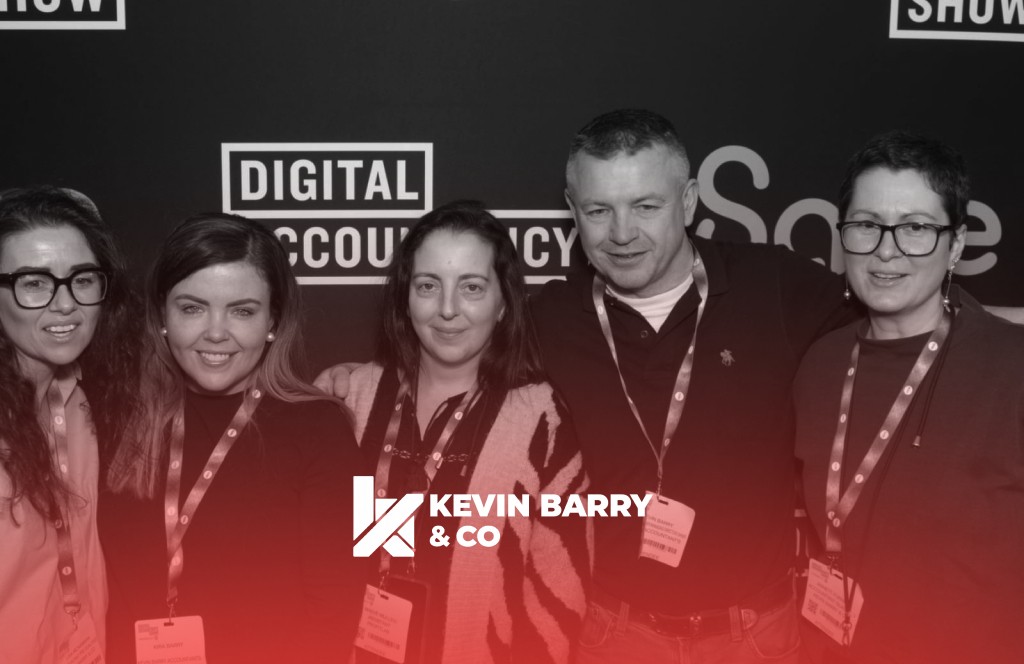
At a conference (Digital Accountancy Show 2025), Kevin saw what AI-driven meeting notes could actually do: listen, summarise, and extract actions automatically.At a conference (Digital Accountancy Show 2025), Kevin saw what AI-driven meeting notes could actually do: listen, summarize, and extract actions automatically.
At that point, simple recording wasn’t enough anymore.
During: How they made the change
Their approach
Barry’s Accountants had clear criteria when looking for a new AI-notetaking solution.
The criteria were:
- Accurate transcription (non-negotiable)
- One secure database for recordings, notes, and tasks
- Automatic attendance in scheduled meetings
- Easy access for the whole team
- Software that doesn’t crash
Vinyl stood out early, and there were no serious alternatives at the time.
Implementation story
As Kevin mentioned, getting started with Vinyl couldn’t have been easier. After attending a training webinar, he invited his team and began testing Vinly for his upcoming meetings.
By the end of the trial period, Vinyl had been rolled out firm-wide, and from there, it became part of daily operations.
What changed in practice
There was little change to Barry Accountants’ day-to-day meeting workflow or processes.
As regular users of online meeting platforms like Zoom to meet with clients, adding Vinyl into the workflow was as simple as integrating their calendar and letting it join the meetings:
- Every scheduled Zoom meeting automatically includes Vinyl
- Meetings produce:
- A recording
- Written notes
- A clear to-do list
- Follow-ups are sent with the recording attached
- Internal handoffs use recorded instructions instead of written explanations
- Managers review meetings in minutes—without rewatching the full call
“If you’re strong on Zoom or Microsoft Teams already, the Vinyl won’t be a problem.”
Vinyl’s role
Vinyl enabled the team to:
- Stop taking notes altogether in online meetings
- Capture tasks simply by saying them out loud
- Centralise recordings, summaries, and actions in one secure placeCentralize recordings, summaries, and actions in one secure place
- Maintain accuracy and accountability without extra admin
After: Results + Proof
A. Results
| Metric | Before | After |
|---|---|---|
| Admin time per meeting | Manual downloads & note-taking | ~20 minutes saved per meeting (minimum) |
| Meetings per week | 30–50 | 30–50 (with less effort) |
| Notes consistency | Depended on energy/time | Standardised, automaticStandardized, automatic |
| Task capture | Manual/error-prone | Automatic via meeting summaries |
| Team adoption | N/A | 100% of staff |
Savings estimate based on Kevin’s stated minimum of 20 minutes per meeting.
Day-to-day impact
- Advisors stay focused in meetings—no note-taking distraction
- Energy levels stay higher throughout the day
- Follow-ups go out faster and more consistently
- Managers can audit or review meetings instantly
- Training and internal collaboration happen via shared recordings
“It’s saving a minimum of 20 minutes per meeting. You’re not opening programs, downloading files, tagging, sending links—it’s just there.”— Kevin Barry, Chartered Accountant, Barry Accountants
What’s next
Going forward, Barry Accountants plan to further their adoption of Vinyl by expanding it’s useinto more internal training workflows, as well as using the Vinyl Mobile App to record and capture in-person meetings.
Bottom line
Barry Accountants didn’t grow by adding headcount; they grew by removing friction.
By standardising how meetings are captured, reviewed, and followed up, the firm supports higher revenue, higher productivity, and a flexible team structure that actually works.By standardizing how meetings are captured, reviewed, and followed up, the firm supports higher revenue, higher productivity, and a flexible team structure that actually works.
For firms running dozens of client calls a week, this isn’t a nice-to-have; it’s operational infrastructure.